Home » Services » Flashes & Floaters
Flashes & Floaters
Flashes and floaters are common visual symptoms that many people experience at some point in their lives. In most cases, they are harmless and related to natural changes inside the eye. However, in some situations, they can be an early warning sign of a more serious retinal condition.
At Institute of Eye Surgery, we provide prompt, specialist assessment of flashes and floaters to ensure your vision is protected and any underlying issues are identified early.
What Are Floaters?
Floaters appear as small shapes that move across your field of vision. They may look like:
- Dots or circles
- Lines or strands
- Clouds or cobwebs
- Spider-like shapes
Floaters are usually small, move quickly, and are most noticeable when looking at a bright background, such as a clear sky or white wall.
What Are Flashes?
Flashes are brief visual sensations that look like flashing lights or lightning streaks, even though there is no actual light source. They are often more noticeable in dim lighting or at night.
Flashes can occur on their own but are commonly noticed alongside floaters.
What Causes Flashes and Floaters?
Posterior Vitreous Detachment (PVD)
As we age, the vitreous — the clear, jelly-like substance inside the eye — naturally thickens and shrinks. This can cause it to pull away from the retina, a process known as a posterior vitreous detachment (PVD).
- Debris from this separation can appear as floaters
- Tugging on the retina can cause flashes of light
In most cases, the vitreous separates cleanly without causing damage. Flashes usually fade and stop, while floaters often become less noticeable over 2–3 months.
Treatment
PVD itself does not require treatment. Careful observation is recommended, with re-examination if symptoms worsen.
Retinal Tear
In some cases, the vitreous may be firmly attached to the retina or the retina may be weak in certain areas. As the vitreous pulls away, this can lead to a retinal tear.
Treatment
Retinal tears are commonly treated with laser therapy to prevent progression to retinal detachment.
Retinal Detachment
If fluid passes through a retinal tear, it can cause the retina to detach from the back of the eye — similar to wallpaper peeling away from a wall. This is a serious, sight-threatening condition.
Symptoms of retinal detachment may include:
- A shadow or curtain in peripheral vision
- Sudden appearance or increase in floaters
- Flashes of light
- Blurred or reduced vision
Treatment
Retinal detachment is treated surgically, often with vitrectomy and/or retinal buckling. The success of surgery depends on several factors, including how quickly treatment is performed.
What to Expect: Flashes & Floaters Assessment at IOES
Before Your Appointment
Your visit begins with a detailed eye examination focused on the retina and vitreous.
- You’ll be asked about:
- Your eye and medical history
- When your symptoms started
- Any recent changes in floaters or flashes
During Your Visit
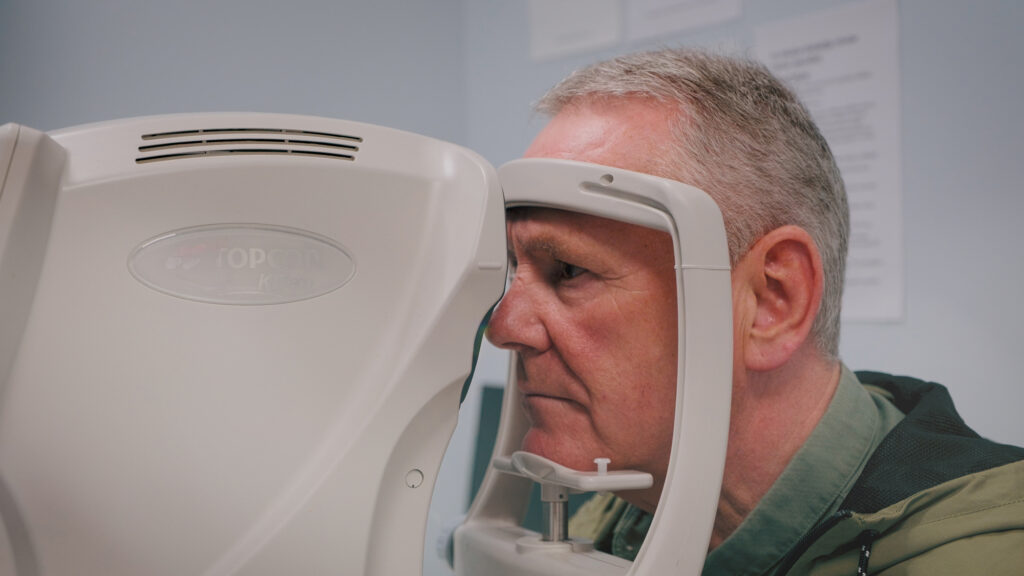
Your consultant may perform a dilated retinal examination and advanced imaging to assess the retina in detail.
You’ll be informed:
- What warning signs to watch for at home
- Whether your symptoms are benign or require treatment
- If follow-up monitoring is needed
After Your Appointment
You’ll receive clear guidance on next steps, which may include:
- Prompt treatment, if a retinal tear or detachment is detected
- Reassurance and observation
- Scheduled follow-up appointments
Important Safety Note
If you experience a sudden increase in floaters, new flashes of light, blurred vision, or a shadow or curtain in your vision, seek urgent eye assessment. Early evaluation is critical to prevent permanent vision loss.
Frequently Asked Questions About Flashes and Floaters
Take the Next Step
Flashes and floaters are often harmless — but sometimes they’re not.
Contact our team or book an urgent eye examination to ensure your retina is healthy and your vision is protected.