Home » Services » AMD
AMD
Age-Related Macular Degeneration (AMD)
Age-related macular degeneration (AMD) is a common eye condition that affects the macula, the part of the retina responsible for detailed central vision. It is the leading cause of significant vision loss in older adults in the developed world.
In its early stages, AMD may not cause noticeable changes in vision. However, early AMD carries an increased risk of progressing to more advanced forms of the condition, which can impact everyday activities such as reading, recognising faces, watching television, or driving.
At Institute of Eye Surgery, we provide expert assessment, advanced monitoring, and evidence-based treatment for AMD — all delivered with personalised, consultant-led care.
Types of AMD
There are two main forms of advanced AMD:
Dry AMD
The most common form. Vision changes usually develop gradually over time.
Wet AMD
A less common but more aggressive form that can lead to rapid central vision loss if not treated promptly.
Both forms affect central vision, while peripheral (side) vision is usually preserved.
How is AMD detected?
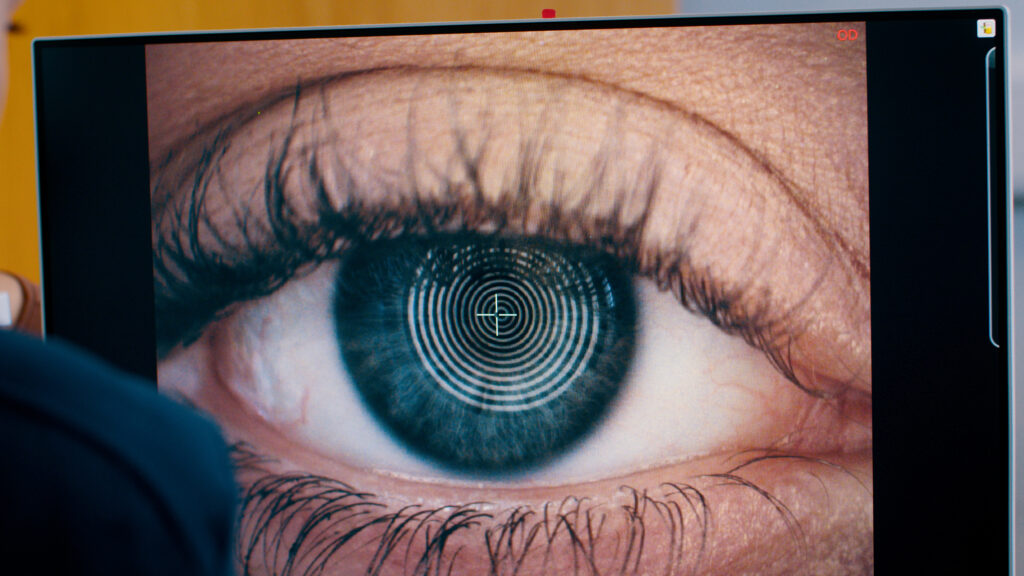
AMD is detected through a detailed eye examination that allows your consultant to closely examine the retina.
At IOES, advanced diagnostic technology is used, including:
- Retinal photography
- Optical Coherence Tomography (OCT), which provides high-resolution images of the retinal layers
OCT imaging is essential for detecting AMD early and guiding ongoing care.
How is AMD monitored?
AMD requires regular monitoring to assess progression and guide treatment decisions. Monitoring may include:
- Visual function assessment
- Repeat OCT imaging
- Autofluorescence imaging to assess retinal health
IOES also offers microperimetry, a specialised test that measures retinal sensitivity over time. This allows subtle functional changes to be tracked, even before noticeable vision loss occurs.
What to Expect: AMD Care at IOES
Before Your Appointment
Your visit begins with a comprehensive eye examination focused on retinal health. This may include advanced imaging such as OCT scans and retinal photography.
You’ll have time to discuss:
- Any vision changes you’ve noticed
- Your eye and medical history
- Questions or concerns about AMD
During Your Visit
Your appointment may include specialised, painless diagnostic tests that allow your consultant to examine the retina in detail.
If AMD is identified, your consultant will:
- Explain the type and stage of AMD
- Discuss what it means for your vision
- Outline monitoring or treatment options tailored to you
If wet AMD is suspected, further imaging may be performed on the same visit.
After Your Appointment
You’ll receive a personalised care plan based on your diagnosis, which may include:
- Regular monitoring and follow-up appointments
- Advice on supplements or lifestyle measures
- Treatment planning, if required
Your care team will guide you clearly through each step, ensuring you feel informed and supported.
Important Safety Note
If you experience sudden changes in vision, distortion of straight lines, a dark or blurred area in your central vision, or rapid worsening of sight, seek assessment as soon as possible. Early evaluation is essential, particularly for wet AMD, where timely treatment can help protect vision.
Frequently Asked Questions About AMD
Take the Next Step
If you have concerns about AMD or changes in your vision, our specialist team is here to help.
Book an eye examination or contact our team to learn more about AMD assessment and care at IOES.